
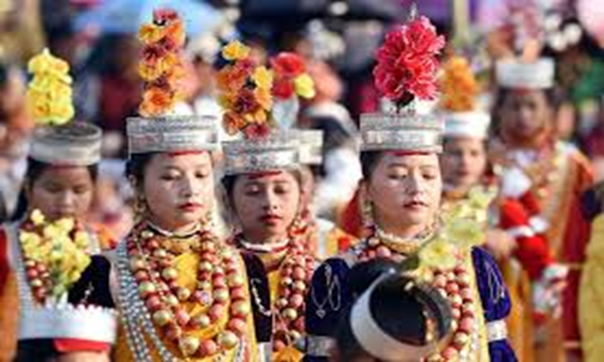
Folk Dances of Northeast India – Features, Cultural Significance & Notes for UPSC, APPSCE and State PSCs
Introduction
The Northeast of India has been described as a living museum of diverse cultures, and for good reason. Spanning Arunachal Pradesh, Assam, Meghalaya, Nagaland, Manipur, Mizoram, Tripura and Sikkim, over 200 tribes inhabit the region, each with their unique oral traditions, festivals, traditional music, and dance. For any UPSC, APPSCE, APSC, MPSC, NPSC, SPSC, TPSC or any Northeast State PSC aspirant, the understanding of the folk dances of the region, as a significant section of the syllabus, is an essential requirement.
In the civil services examinations, the following are regularly featured:
- Tribal Culture
- Folk Traditions
- Dances of Festivals
- Cultural Heritage of UNESCO
- GI-tagged Art Forms
- Socio-Religious Customs of Tribes
It is essential to know these in order to do well Prelims (objective MCQs) and Mains (GS-1, Essay, State specific papers).
Therefore, this blog aims to provide a comprehensive, exam-focused, easy-to-revise guide to aid aspirants in mastering this high yield topic.
Why is the Folk Dances of the Northeastern States Relevant for UPSC and PSC Exams?
- Inclusion In the Curriculum Under GS-1: Indian Culture
In the syllabus for the UPSE along with all of the North Eastern states PSCA, we can find a section entitled, Indian Culture covering salient aspects of Art Forms, Literature and Architecture.
Folk dances are undoubtedly a part of art forms, thus a definite potential area for questions.
- Culture Questions Are Asked In All State PSC
Tribals dances and festivals are a given for questions in exams such as APPSCE, APSC, MPSC- Manipur, NPSC- Nagaland and MPSC- Mizoram, thus all state PSCs.
- Socio-Cultural Evolution of society
These dances are connected to:
- agriculture,
- nature worship,
- myths and legends,
- communion,
- rituals and traditions
Such information is relevant in anthropology and ethnography as well as society-related questions found in the GS.
- Soft Power and Cultural Diplomacy
Dances from the North East are showcased internationally. This relates to Mains GS 1 and GS 2: soft power, culture in diplomacy.
State Wise Folk Dances of North East India (Comprehensive Notes)
Below is a state wise distribution of the primary folk dances that recur in exams. Comprehensive notes have been provided detailing the origin, instrunment, occassion, features, significance and length for the UPSA prelims and Mains.
-
Arunachal Pradesh: Dances of the Land of the Rising Sun
Of all the different genres of dances in India, Arunachal Pradesh hosts some of the finest ceremony and combat skirmishes in the country, due to the fact that the state is home to 26 major tribes and 100 sub tribes.
(a) Ponung Dance – Adi Tribe
Main Features
- Women positioned in a circle.
- Male priest, miri, leads the way and recites sacred poetry.
- Their motions are harmonious, coordinated, and slow.
Cultural Significance
- Represents feminine grace and the harmony of the community.
- Before the crops are harvested, the forest spirits are invoked.
(b) Aji Lamu – Monpa Tribe
Main Features
- Dance of buddism, performed as a ritual.
- Brightly colored masks and heavy woollen costumes are worn by the performers.
- Strong influence from tibet.
Cultural Significance
- Performed during the tibetan new year.
- Represents the triumph of good over evil.
(c) Bardo Chham – Sherdukpen Tribe
Main Features
- Dance with masks that signifies 12 evil spirits.
- Use of colourful masks and dramatic movements.
Cultural Significance
- Taught lessons with morals.
- Afterwards, the harvest is collected.
(d) Popir Dance – Galo Tribe
Main Features
- Style performed is semi-classical and is done by a group of women.
- Hand movements are done with grace and traditional dances are incorporated.
Cultural Significance
- To pray for prosperity, this has been performed during the Mopin Festival.
-
Assam: Assam is the center of the Northeast Culture
Assam’s folk dances illustrate the integration of the state’s agricultural rhythm, Vaishnavite way of life, and tribal diversity.
(a) Bihu Dance – Assamese Community
Main Features
- Engaging movements, quick drumming
- Group performances with males and females
- Dhol, Pepa (buffalo horn) – signature instruments
Cultural Significance
- Commemorates Rongali Bihu (spring)
- New beginnings, youthfulness, and fertility are symbolically represented.
- It is important for the UPSC examination, as Bihu is widely recognized across India.
(b) Bagurumba – Bodo Tribe
Main Features
- “Butterfly Dance” is its other name.
- Gracefully, girls sway their arms as suffused imitating the motion of a butterfly.
Cultural Significance
- Presented during Bwisagu Festival.
- Promotes peace with the environment.
(c) Jhumur Dance – Tea Tribe Community
Main Features
- In chains, women dance, while the men play the instruments.
- It is derived from the tribal cultures, transporting practices during the colonial tea plantation period.
Cultural Significance
- Celebration and the eagerness of the labor work.
- Manipur: Homeland of Classical and Folk Verses
3. While the state has a strong folk tradition, the Manipur Ras Leela is classical.
(a) Thang Ta – Martial Art Dance
Main Features
- Execution of sword and spear movements in a choreography.
- Traditional war training as a performance for distraction.
Cultural Significance
- A symbol of courage and Manipuri martial legacy.
(b) Dhol Cholom – Dance of the Holi Festival
Main Features
- Male dancers.
- Large drums and perform acrobatic leaps and spins.
Cultural Significance
- Associated with the Holi festival of Yaoshang.
(c) Lai Haraoba Dance
Main Features
- Reconstruction of Manipuri mythology universe creation.
- Steps taken in Ragam–Tal (rhythm) framework.
Cultural Significance
- Highly ritualistic as well as sacred.
-
Meghalaya: The Hills and Clouds Dance
(a) Shad Suk Mynsiem – Khasi Tribe
Main Features
- The name signifies “Dance of Joyful Hearts”.
- Women don gold and red shiny garments.
- Men in warrior protective stances.
Cultural Significance
- Annual spring celebration and a fertility offering.
(b) Wangala Dance – Garo Tribe
Main Features
- Ensemble of one hundred drums, Dama.
- Coordinated dance movements in honor of the Sun God.
Cultural Significance
- Associated with the harvest festival Wangala.
-
Nagaland: The Land of Warrior Dances
(a) Zeliang Dance – Zeliang Tribe
Main Features
- Male dancers with war spears and shields.
- Exuberant rhythmic war cries.
Cultural Significance
- Depicts Naga Valor.
(b) Chang Lo / Sua Lua (Chang Tribe)
Main Features
- Depiction of ancient war battles.
- Wears headgear of warriors embellished with feathers and ornaments.
Cultural Significance
- Done after winning or during important community events.
(c) Naga Hornbill Dance
Main Features
- Performed during the Hornbill Festival.
- Represenation of the unity of all 16 Naga tribes.
Cultural Significance
- Prominence of culture and tourism.
- Cultural Integration.
6. Mizoram- Dance of grace and Rhythm
(a) Cheraw Dance – Bamboo Dance
Main Features
- Most popular clapping dance with bamboo sticks.
- Women step in time to the music between the swinging bamboo that are moved by dancers.
Cultural Significance
- Most popular dance in the world, displays and demonstrates the hospitality of the Mizo people and their ability to work together.
(b) Khuallam Dance
Main Features
- “Dance of Guests”
- Done during the Pawl Kut festival.
Cultural Significance
- Represents bond and unity of the community.
(c) Chheih Lam
Main Features
- Circle dance set to traditional songs and rhythmic music.
Cultural Significance
- Dance of recreation in the evening.
7. Tripura
(a) Hojagiri Dance – Riang Community
Main Features
- Performed by girls balancing vessels.
- Dancing includes complexacrobatic footwork and balance.
Cultural Significance
- Farming success is celebrated.
(b) Garia Dance
Main Features
- Dances for the Garia Puja.
- Represents the worship of the agricultural deity Garia.
-
Sikkim: Himalayan Dance Traditions
(a) Singhi Chham
Main Features
- Dancers wear snow lion (Singhi) costumes.
- Dances Singhi which reflects Buddhist mythology.
Cultural Importance
- It is popular during the Pang Lhabsol festival.
(b) Yak Chham
Main Features
- It is a representation of yak herders.
- Dancers wear costumes of yaks.
Common Features of Northeast Folk Dances (Very Important for Exams)
- Nature centric themes like agriculture, forests, fertility, and rivers.
- Promotes community bonding, for participation is done in groups.
- Costumes are vibrant and made of handwoven fabrics, bamboo, and feathers.
- Authentic tribal forms of traditional, indigenous instruments like drums, cymbals, bamboo flutes, and horns are used.
- Many dances are linked with deity. Spirits are involved.
- Martial elements are present, especially in Naga and Manipuri traditions.
- There are celebrations for different seasons like harvest, spring, and New Year.
- Myths and historical events are narrated in songs.
- There is a lack in external influence, preserving the tribal form in its authenticity.
Cultural Significance of Folk Dances in Northeast India
-
Preserving Tribal Identity
Folk dances are a living repository of ethnic heritage and dance.
2. Strengthening Social Unity
Improved interpersonal connections due to community involvement.
-
Ritual and Spiritual Significance
Numerous ceremonial dances are associated with the harvest, weddings, and purification ceremonies.
-
Protection of Indigenous Knowledge
Dances enrich the community’s mythology, sustain ethical values, and teach agricultural practices.
-
Promotion of Tourism and Soft Power
Cultural outreach is enhanced through the Hornbill Festival and Ziro Festival.
-
Women’s Participation and Empowerment
Numerous dances such as Bagurumba, Ponung, and Cheraw emphasize the social roles of women.
-
Inter-Tribal Cultural Exchange
Diverse tribes are brought together through festivals and state functions
Exam Focused Quick Notes (High Likely Questions)
Cheraw Dance is of Mizoram
Bihu & Bagurumba are of Assam
Aji Lamu & Bardo Chham are of Arunachal Pradesh
Shad Suk Mynsiem –Meghalaya (Khasi)
Wangala –Meghalaya (Garo)
Zeliang & Chang Lo –Nagaland
Hojagiri –Tripura
Singhi Chham –Sikkim
Thang Ta & Lai Haraoba –Manipur
These are common in the Prelims MCQs
How to Study Northeast Folk Dances for UPSC & APCSCE
- Make a state-wise mind map
- Associate each dance with the tribe
- Learn via mnemonics and visuals
- Revise from PIB releases, exams, major festivals
- Practice MCQs regularly
Conclusion
The folk dances of Northeast India magnificently portray the country’s cultural and spiritual identity. For civil services candidates, it is a high-potential, static subject with massive scoring scope. The more you study, the more you understand and cherish the oneness and diversities of the country.
PART–1: MCQs (Practice Set – 15 Questions)
(All are exam-standard)
- The “Ponung Dance”, performed with a Miri priest reciting myths, belongs to which tribe?
A. Galo
B. Adi
C. Monpa
D. Bodo
Answer: B
- Cheraw, the famous bamboo dance, is traditionally associated with:
A. Tripura
B. Manipur
C. Mizoram
D. Meghalaya
Answer: C
- Bagurumba Dance, often called the “Butterfly Dance”, belongs to the:
A. Khasi tribe
B. Bodo tribe
C. Riang tribe
D. Chang tribe
Answer: B
- Which of the following dances is performed during the Wangala festival?
A. Aji Lamu
B. Jhumur
C. Shad Suk Mynsiem
D. Dama Dance (Garo)
Answer: D
- The “Aji Lamu Dance” has cultural influence from:
- A. Hindu Vaishnavism
B. Tibetan Buddhism
C. Islam
D. Jainism
Answer: B
- The Hojagiri Dance, performed with balancing acts, belongs to which community?
A. Tea tribes
B. Riang community
C. Sherdukpen tribe
D. Lai community
Answer: B
- The Dhol Cholom dance is performed during:
A. Pawl Kut
B. Rongali Bihu
C. Yaoshang Festival
D. Losar Festival
Answer: C
- Which of the following dances is a war dance?
A. Popir
B. Chang Lo
C. Bagurumba
D. Shad Nongkrem
Answer: B
- Singhi Chham, the Snow Lion Dance, represents mythology from:
A. Bodo folklore
B. Monpa legends
C. Buddhist traditions
D. Tribal animism
Answer: C
- Zeliang Dance is associated with which state?
A. Mizoram
B. Nagaland
C. Arunachal Pradesh
D. Assam
Answer: B
- Which dance is performed by Manipuri warriors using swords and spears?
A. Thang Ta
B. Lai Haraoba
C. Leima Jagoi
D. Pung Cholom
Answer: A
- Which of the following pairs is CORRECT?
A. Khasi – Wangala
B. Garo – Shad Suk Mynsiem
C. Bodo – Bagurumba
D. Riang – Cheraw
Answer: C
- A Mizo dance performed for welcoming guests is called:
A. Chheih Lam
B. Khuallam
C. Cheraw
D. Pawla
Answer: B
- Which Naga festival prominently features a combined dance of multiple tribes?
A. Moatsu
B. Sekrenyi
C. Hornbill Festival
D. Chapchar Kut
Answer: C
- Jhumur Dance is commonly performed by:
A. Bodo tribe
B. Tea tribe communities
C. Khasi tribe
D. Chakma community
Answer: B
PART–2: MAINS QUESTIONS WITH MODEL ANSWERS
Q1. Highlight the major features and cultural importance of folk dances of Northeast India. (250 words)
Model Answer (High-quality)
Northeast India is one of the most culturally diverse regions of the country, inhabited by more than 200 tribes and numerous sub-tribes. Its folk dances reflect deep connections with nature, community life, and spiritual beliefs.
These dances are characterised by group formations, rhythmic body movements, colourful handwoven costumes, bamboo ornaments, and indigenous musical instruments such as dhol, pepa, dama, bamboo flutes, and cymbals. Many dances such as Ponung (Arunachal), Bagurumba (Assam), Shad Suk Mynsiem (Meghalaya) and Khuallam (Mizoram) depict agrarian cycles, courtship, and thanksgiving to deities. Ritualistic dances like Aji Lamu and Bardo Chham reflect Buddhist and animistic influences, while martial dances such as Chang Lo (Nagaland) and Thang Ta (Manipur) showcase valour and warrior tradition.
Culturally, these dances preserve oral traditions, myths and folklore essential to tribal identity. They also act as tools for social cohesion, symbolising unity and community participation. Events like the Hornbill Festival and Wangala Festival have transformed these dances into cultural ambassadors, boosting tourism and soft power diplomacy.
Thus, the folk dances of Northeast India are not merely artistic expressions but living cultural documents that chronicle the region’s ecological, spiritual and social ethos.
Q2. Explain how the folk dances of Northeast India contribute to India’s cultural diversity. (150 words)
Model Answer
Folk dances of Northeast India significantly enrich India’s cultural diversity through their unique themes, rituals, and aesthetic forms. Each tribe—such as the Adi, Bodo, Khasi, Garo, Chang, Riang, Monpa and others—possesses distinctive dance traditions rooted in local mythology, animism, agricultural practices, and seasonal cycles.
While dances like Bagurumba and Cheraw celebrate nature and communal harmony, others such as Lai Haraoba and Thang Ta reflect spiritual and martial legacies. Their use of indigenous textile patterns, masks, bamboo structures, and organic instruments showcases material culture rarely found elsewhere in India.
These dances preserve centuries-old oral traditions and demonstrate the coexistence of multiple belief systems—Buddhism, animism, tribal faiths and Vaishnavite influence. By representing the voices of remote mountain communities, Northeast dances expand India’s cultural footprint and highlight the country’s pluralistic identity.
Q3. Discuss the role of festivals in sustaining folk dance traditions in Northeast India. (150 words)
Model Answer
Festivals play a pivotal role in sustaining the folk dance traditions of Northeast India by providing a cultural framework for their performance, transmission, and evolution. Most dances are intrinsically linked to festivals associated with agriculture, harvest, New Year rituals, ancestor worship, and nature veneration. For instance, Bagurumba is central to Bwisagu Festival, Cheraw is integral to Chapchar Kut, Wangala Dance accompanies the Garo harvest festival, and Ponung is performed during pre-harvest rituals.
Festivals serve as community gatherings where elders teach youths the songs, choreography and ritual meaning of the dances. They act as platforms for reinforcing tribal identity and social cohesion. Additionally, state-sponsored festivals like Hornbill (Nagaland), Ziro (Arunachal), and Losar (Tawang) promote cultural tourism, ensuring economic and institutional support for these traditions.
Thus, festivals ensure the continuity, visibility, and vitality of folk dance heritage across generations.
PART–3: NOTES
Folk Dances of Northeast India — Quick Revision Notes
- Arunachal Pradesh: Ponung (Adi), Aji Lamu (Monpa), Bardo Chham (Sherdukpen), Popir (Galo)
- Assam: Bihu, Bagurumba (Bodo), Jhumur (Tea tribes)
- Manipur: Thang Ta, Dhol Cholom, Lai Haraoba
- Meghalaya: Shad Suk Mynsiem (Khasi), Wangala (Garo)
- Nagaland: Chang Lo, Zeliang Dance, Hornbill Dance
- Mizoram: Cheraw, Khuallam, Chheih Lam
- Tripura: Hojagiri (Riang), Garia Dance
- Sikkim: Singhi Chham, Yak Chham