
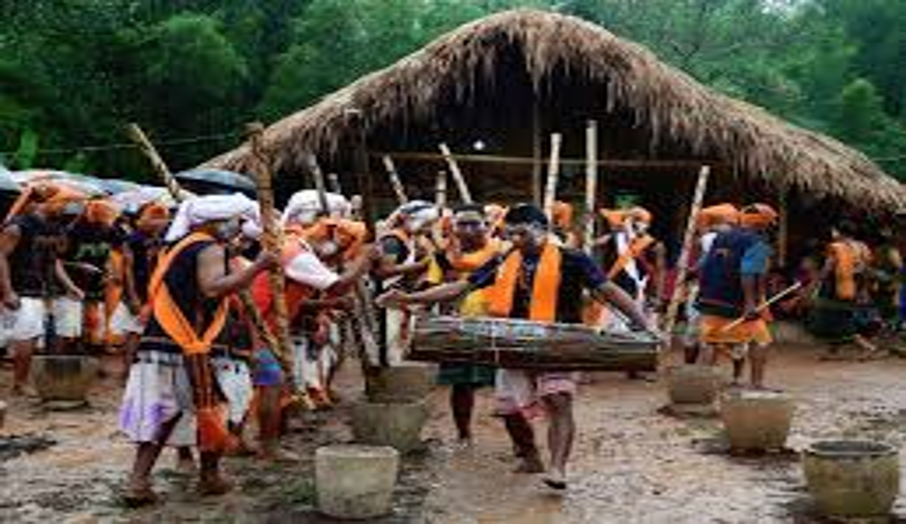
Displacement, Human Rights & Social Justice Among Indigenous Communities: A Northeast Perspective for UPSC & Northeast PCSAspirants
In the Northeast of the country, the questions of development, displacement, and human rights are not purely theoretical, but rather real-world situations to be dealt with. This is knowledge that all UPSC, APPSCE, APSC, MPSC, NPSC, TPSC, SPSC, and all other state civil services candidates need to master, as these topics intertwine with the core of the syllabus – GS 1 (Society), GS 2 (Governance & Social Justice), GS 3 (Issues of Development), and Ethics.
This blog captures the essence of one of the most significant topics for the future administrators of this nation, Displacement and Human Rights, with emphasis on the Northeast.
- Displacement Caused by Development Projects: The Invisible Cost of Growth
Infrastructure – roads, hydropower dams, highways, airports, and even military bases – are the foundation of all development. However, for many Indigenous communities, especially in Arunachal Pradesh, Assam, Nagaland, and Manipur, development has come at the unintended consequence of losing their ancestral land, cultural identity, and community self-determination.
1.1 Why Displacement Hits Tribal Communities the Hardest
In the case of Indigenous People, unlike the majority of urban societies, land is:
- A sacred entity
- A conduit for clan and family identity
- A framework for legal order
- A provider for subsistence activities like jhum cultivation, and hunting and gathering, as well as crafts and various trades
In the case of civilizational losses, the displacements and submerging of valleys and villages in massive infrastructure projects, especially in and in the construction of large hydroelectric dams, the losses are not only physical. They are.
1.2 Relevance of Examples for Case Studies
In the entire Northeast region, the following displacements have been documented:
- Hydraulic power projects along the Siang, Subansiri, and Lohit, Kameng rivers
- Road expansion under the Bharatmala and Strategic Border Connectivity programme
- Mining and quarrying activities in the foothill zone
- Protected Areas, which have been declared without prior and informed consent of the tribal councils.
When tackling questions in the UPSC and Northeast PCS exams regarding “development vs. displacement,” the inclusion of northeastern case studies demonstrates greater depth and regional and administrative cognisance.
- Who defines development? The paradox of small-scale economies and large-scale developments
Social justice theory asks, Who gets to decide development?’
For Indigenous nations, development is not a matter of dollars, investments, or megawatts, but rather:
Cultural survival
Ecological harmony
Community health
Self-determination
A developing state and a corporation, on the other hand, see developement as:
Major hydropower
Metropolitan development
Exploitation of ores
Targeted development of other essential roads and facilities
This sets the stage for conflict and can be seen in the Northeast.
2.1 The stress of large-scale disruptions on traditional livelihoods
Disruption of large-scale activities affects
Jhuming and the associated cyclical cultivation
Pastoral router of the grazing and the sacred Valley/Mountains
Traditional craft and bamboo/fibre economies
Riverine livelihoods and fishing
So loss of access to forests or riverbanks can collapse entire socio-economic systems.
2.2 The impact of mass displacement and its psychological effects
Displacement often shatters the traditional systems of
The rule of clans
Shifting of the elderly
Social units of a community
Resulting in the loss of a group’s identity, social isolation and the collapse of governance systems of the community. This is the value of social systems as identified and discussed in gs1 (Indian Society)
2.3 The paradox of administrators as a system
It is a paradox in the
Future administrators of the system
Who have to balance
National security (a priority in border states like Arunachal Pradesh)
Economic growth
Protection of at-risk groups.
Smart governance means the decision-making should be inclusive, in particular in considering the cultural framework of the community and should be based on the prior (dis)consent of the people.
3. Human Rights Frameworks Protecting Indigenous Communities
Constitutional protection is offered by both national and regional human rights organisations.
3.1. Principal Architecture
National Human Rights Commission (NHRC)
State Human Rights Commission
National Commission for Scheduled Tribes (NCST)
The National Commission for Women (NCW) is Relevant for Women of the Tribal Community
Legal service authorities at the district level
These bodies intervene in cases of:
Evident Forced Displacement
Land Rights and Other Rehabilitation Violations
Lack of Rehabilitation
Abuses of Basic Human Rights in the Implementation of the Project
3.2. Constitutional Protection
Constitutional Provisions for Indigenous Communities:
5th and 6th Schedules
Art. 371 (A, B, C, G, etc. )
Panchayats (Extension to Scheduled Areas) Act(PESA)
Forest Rights Act (FRA)
In the Northeast Region (NER), particularly in the 6th Schedule and Art 371A/371G, Tribal Councils have the right to self-governance in respect of Lands and other Assets. Therefore, the acts of Displacement are unconstitutionally valid.
4. Ground-Level Advocacy: The Silent People’s Voice
Communities that feel ignored come together. The Grassroots actions across the Northeast have been vital in influencing the development policies.
4.1 Grassroots Resistance by Tool Position
Public Hearing & Social Audits
Memorandum to District Admins
Mobilizing Student Unions, Women’s Organizations, and Tribal Councils
Community and Social Media
Nonviolent Environmental Protests
Petitions to the Courts or Human Rights Commissions
4.2 How Tribal Identity Plays a Role in Mobilisation
Identity gives us a:
- A sense of unity,
- Cultural legitimacy,
- Moral authority, and
- Collective bargaining power.
Tribal institutions often win these movements because they channel the collective will of the community, not individual interests, which is paramount when doing UPSC/PSC answers on tribal movements/grassroots governance.
5. Development vs. Rights: The Administrative Balancing Act
Development is a necessity; however, development without justice is unconstitutional and unsustainable.
In Development, an administrator must ensure:
- Free, Prior & Informed Consent (FPIC)
- Transparent Environmental Impact Assessments (EIAs)
- Cultural compensation (beyond market price)
- Livelihood restoration (not monetary rehab only)
- Protection of sacred sites/Customary land relations
- Gender rehabilitative responsiveness, especially since tribal women’s impacts are disproportionately greater.
This intersects with GS-2 (Governance) and Ethics (Dilemmas of Public Administration).
6. Lessons for UPSC & Northeast PCS Aspirants
Tips for Answer Writing
- Use case studies from Arunachal Pradesh, Assam, Manipur, and Nagaland.
- Explain the constitutional safeguards for the tribes.
- Show the understanding of community-centrism.
- Critically examine development-induced displacement and its impacts.
- Describe the role of HRI (Human Rights Institutions).
- Cite examples of grassroots and tribal council movements.
- Propose governance offers that are not too extreme.
Conclusion
For Indigenous peoples, displacement is NOT just the geographic removal from a place. It is the rupture of a people’s identity, history, and connection to the land. So, as the aspiring future admin of the Northeast, you MUST adopt a development model that respects culture, autonomy, and justice.
You should offer a model of ‘TRUE’ development that will NOT force a community to sacrifice its identity for progress.
A participatory development vision, just and culturally anchored, is the only socially viable option.
Northeast GK MCQs (Based on the Blog Topic: Displacement, Human Rights & Social Justice among Indigenous Communities)
- Development-induced displacement in tribal regions of the Northeast is particularly severe because:
- Tribals rely mainly on urban jobs
B. Land holds deep cultural and identity-based significance
C. Most tribal people have no attachment to territory
D. Compensation is always adequate
Correct Answer: B
- Large hydropower projects in Arunachal Pradesh often cause conflict because they:
- Increase urban unemployment
B. Interfere with tribal customary land systems and sacred landscapes
C. Reduce forest cover only in urban areas
D. Have no impact on traditional livelihoods
Correct Answer: B
- Which constitutional safeguard protects indigenous land and cultural rights in many parts of the Northeast?
- Article 356
B. Article 371 and the Sixth Schedule
C. Article 323A
D. Article 33
Correct Answer: B
- “Free, Prior and Informed Consent (FPIC)” is significant because it:
- Allows corporations to bypass community consultation
B. Ensures tribal communities participate in decisions affecting their land and livelihoods
C. Is applicable only in urban industrial zones
D. Replaces environmental impact assessments
Correct Answer: B
- Which human rights institution can intervene in cases of forced displacement of tribal communities?
- National Sports Federation
B. National Human Rights Commission (NHRC)
C. NITI Aayog
D. Reserve Bank of India
Correct Answer: B
- A key reason for resistance movements against dams in the Northeast is:
- Communities want to shift entirely to urban lifestyles
B. Development projects often ignore customary rights and local decision-making structures
C. The Northeast has surplus electricity
D. Dams reduce rainfall
Correct Answer: B
- Grassroots advocacy in indigenous regions is strengthened by:
- Weak community identity
B. Strong tribal cultural cohesion and collective action
C. Compulsory relocation orders
D. Lack of traditional governance institutions
Correct Answer: B
- Which of the following BEST captures the conflict between development and indigenous rights?
- Urbanization increases road accidents
B. Large-scale projects may undermine traditional livelihoods and cultural landscapes
C. Tribals refuse all modern facilities
D. Tribal areas have no economic potential
Correct Answer: B
- The primary limitation of compensation-based rehabilitation is that:
- It always provides more than required
B. It ignores the non-monetary value of land to indigenous communities
C. It is easily implemented
D. It has no relevance to cultural identity
Correct Answer: B
- In many tribal areas of the Northeast, traditional governance institutions play a major role because they:
- Replace all state authorities
B. Make development projects unnecessary
C. Represent cultural legitimacy and collective decision-making
D. Have constitutional powers to implement central schemes
Correct Answer: C
MAINS QUESTION (UPSC/Northeast PCS Exams Standard, 250 Words)
“Discuss the major human rights concerns associated with development-induced displacement among indigenous communities in the Northeast. How can administrative measures ensure a balance between development goals and social justice?”
MODEL ANSWER (250 Words)
Development-induced displacement in the Northeast raises deep human rights concerns, particularly for indigenous communities whose identities, customary systems, and livelihoods are closely tied to ancestral land. Hydropower dams, highways, mining and border infrastructure often require large tracts of land, resulting in physical, cultural, and psychological displacement.
The foremost human rights concern is loss of customary land, which for tribal groups is not merely property but a source of lineage, rituals, ecological knowledge, and social organisation. Compensation frameworks typically quantify land in monetary terms, ignoring its cultural and spiritual value. Livelihood disruption is another major issue, as displacement breaks jhum cycles, river-based livelihoods, pastoral routes, and craft economies. The absence of Free, Prior and Informed Consent (FPIC) violates constitutional safeguards under the Sixth Schedule and Article 371, weakening community autonomy. Displacement also fractures social cohesion, leading to loss of inter-generational knowledge, cultural alienation, and psychological trauma. Women and elderly persons bear disproportionate burdens due to disrupted support systems.
Balancing development with justice requires participatory, transparent and culturally sensitive governance. Administrators must ensure FPIC, conduct rigorous Environmental and Social Impact Assessments, and provide rehabilitation that restores livelihoods—not just compensation. Mapping customary land, protecting sacred sites, and integrating tribal councils in decision-making are essential. Strengthening human rights commissions, legal aid, and grievance redressal mechanisms further empowers communities. Sustainable development must prioritise social equity, ecological balance, and respect for tribal identity.
A just development model is one where growth does not erase culture, and progress uplifts rather than displaces indigenous communities.